

Exceptional In-House Catering for Your Events
Full-service event catering in Miami, Florida
The Barn 305

Catering Designed Around Your Celebration

A Unified Dining Experience, Handled In-House
Great events are remembered not only for how they look, but for how they taste. At The Barn 305, our in-house catering is thoughtfully designed to complement your event while eliminating the complexity of working with outside vendors.
By keeping catering fully in-house, we create a seamless experience where menus, timing, presentation, and service are all carefully coordinated. From intimate gatherings to large celebrations, our catering team works alongside our event staff to ensure every meal enhances the overall experience.
Stress-Free Planning With One Dedicated Team
Coordinating multiple vendors can quickly become overwhelming. Our in-house catering model allows you to work with one experienced team that understands the flow, layout, and logistics of The Barn 305.
From menu planning to day-of execution, we handle the details with professionalism and care — ensuring your dining experience feels effortless, organized, and polished.
What’s Included With Our In-House Catering
-
-
Custom menu planning tailored to your event
-
On-site food preparation and professional service
-
Seamless coordination with your event timeline
-
Catering options for weddings, quinceañeras, corporate events, and photoshoots
-
Flexible service styles to suit your celebration
-
Our team works closely with you to align flavors, presentation, and service style with your vision.
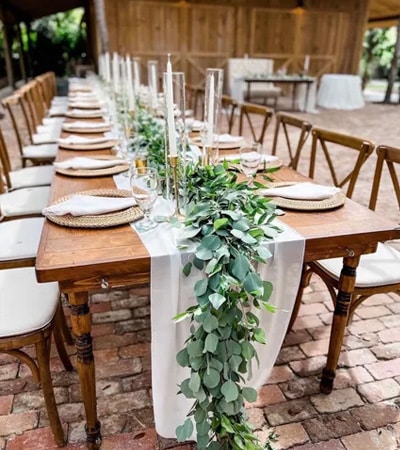

What to Know About Wedding and Event Catering in Miami
Food is one of the most remembered parts of any celebration. Long after the photos are taken and the playlists fade from memory, guests talk about the meal — what they ate, how it was served, whether the portions were generous, whether their dietary needs were handled well. In Miami specifically, food carries cultural weight. With such a diverse population, wedding and event menus often span Cuban, Latin, Caribbean, American, Mediterranean, and Asian influences, sometimes all in the same reception.
Before finalizing any catering decisions, it helps to understand how event catering actually works, what styles and service levels exist, and what questions to ask before signing a contract. The right catering approach depends on your guest count, your venue, your budget, and the kind of atmosphere you want — and there’s no single “best” choice.


What to Ask Before Booking Catering for Your Event
Whether you’re hiring an outside caterer or working with an all-inclusive venue, these are the questions that separate a smooth catering experience from a stressful one:
- What’s actually included in the quoted price? Some caterers quote food costs and bill staff, rentals, setup, and service charges separately. Ask for an itemized proposal so you know the real total.
- Is service staff included in the price? A typical event needs one server per 15-25 guests. Understaffing leads to slow service and long lines — overstaffing inflates the bill.
- What’s the service fee and gratuity policy? Most caterers charge a service fee (15-22%) in addition to the base price. Confirm whether this is the final price or whether tip is expected on top.
- Is bar service available through the caterer? Some caterers provide bar packages; others require a separate bar service provider. Clarify whether your quote includes bartenders, glassware, and mixers.
- Do you provide rentals like linens, china, and glassware? Some caterers include rentals; others charge separately or require you to source your own.
- What’s your policy on dietary restrictions and allergies? Couples should always ask about vegan, vegetarian, gluten-free, and allergy accommodations — and how the caterer prevents cross-contamination in the kitchen.
- Is there a tasting before the event? Most professional caterers offer tastings 2-4 months before the event so you can confirm menu choices and adjust flavors.
- What happens to leftover food? Some venues and caterers donate leftovers; others require couples to handle disposal themselves.

Catering Service Styles to Consider
Most wedding and event caterers offer several service styles. Each creates a different atmosphere and affects your timeline, staffing needs, and budget.
Plated dinners create a formal, restaurant-style experience. Guests stay seated while servers deliver each course in a specific order. Plated service is predictable, elegant, and keeps the timeline on track — but it typically requires more staff per guest and limits menu variety since most guests receive the same entrée.
Buffet service gives guests variety and the freedom to choose their portions. It works well for larger weddings, mixed dietary needs, and more casual atmospheres. Buffets often cost less than plated service because they require fewer servers, though they may create short wait times if the layout isn’t planned well.
Family-style places shared platters on each table for guests to pass. It creates a warm, communal feel that works especially well at rustic, barn, and garden weddings. Family-style is a middle ground between plated and buffet — more relaxed than plated, more intentional than buffet.
Food stations are interactive setups where guests move between themed areas — a pasta station, a carving station, a taco bar, a sushi display. Stations encourage mingling during cocktail hour or reception and give guests a fun, participatory experience. They work especially well for Miami weddings where guests appreciate variety.
Passed hors d’oeuvres are bite-sized appetizers carried on trays by servers during cocktail hour. They keep guests fed without forcing them to a buffet line and allow them to socialize while enjoying food.
Food trucks have become a popular option for more casual celebrations, rehearsal dinners, or late-night snack moments at weddings. They create a memorable, unique experience — though they require outdoor space and weather considerations.
Most large weddings combine multiple styles — passed hors d’oeuvres during cocktail hour, a plated or buffet dinner, and a late-night snack station near the end of the reception.

In-House Catering vs. Outside Caterers: Pros and Cons
One of the biggest decisions when booking a wedding venue is whether to work with a venue that provides catering in-house or bring in an outside caterer. Both approaches have trade-offs.
In-house catering advantages:
- One vendor, one contract, one point of contact
- The kitchen and service staff already know the venue’s layout, power setup, and logistics
- No coordination headaches between venue and caterer
- Often bundled with decor, rentals, and service for a single predictable price
- No food transportation — meals go from kitchen to table in minutes
In-house catering trade-offs:
- Less flexibility to source a specific outside chef or cuisine style
- Menu options are limited to what the venue’s team specializes in
Outside caterer advantages:
- More flexibility in choosing specific cuisines, chefs, or dietary specialists
- Potentially broader menu creativity
- Ability to bring in a caterer you already trust from previous events
Outside caterer trade-offs:
- More vendors to coordinate (caterer + venue + possibly rental company)
- Often requires additional fees for kitchen use, staff setup, and delivery
- More risk of logistics problems on event day
- Higher total cost once all separate bills come in
For most couples, the simplicity of in-house catering outweighs the flexibility of outside catering — especially when the venue has a strong culinary team and transparent pricing.
Common Catering Mistakes to Avoid
- Underestimating guest count. Always round up. If you invited 150 and expect 120, cater for 130. It’s better to have extra than to run short.
- Skipping the tasting. A tasting is the only way to confirm flavors before the event. If a caterer won’t offer one, that’s a red flag.
- Ignoring dietary restrictions. At any wedding of 100+ guests, there will almost always be at least one vegetarian, one vegan, one gluten-free guest, and one person with a serious allergy. Plan for it.
- Assuming the quoted price is the final price. Service charges, gratuity, rentals, and taxes can add 25-35% to the base quote. Always ask for the all-in total.
- Booking too late. Popular caterers book up 8-12 months in advance for Saturday weddings. Don’t wait until the last minute.
- Forgetting vendor meals. Photographers, videographers, DJs, and planners who are working a 6-10 hour event need to eat too. Most couples add vendor meals at a reduced rate.
- Rushing the menu tasting. Take your time during the tasting, ask questions, and give honest feedback. The caterer wants the food to be great as much as you do.
Catering Frequently Asked Questions
How much does wedding catering cost in Miami?
Wedding catering in Miami typically ranges from $75 to $200 per guest depending on the service style, menu, and bar package. Plated dinners cost more than buffets. Premium proteins, open bars, and tasting menus can push costs higher. All-inclusive venues often bundle catering into flat package pricing, which can be more predictable than per-guest billing.
When should I book a caterer?
Most couples book their caterer 8-12 months before the wedding. Peak Saturday dates often require booking 12-18 months out for the most in-demand caterers.
What's a typical service fee for wedding catering?
Most caterers charge a 15-22% service fee on top of the base food and beverage cost. This fee covers staff, setup, breakdown, and overhead — and is separate from gratuity in some cases. Always confirm whether gratuity is included.
Do I need to feed my vendors?
Yes. Industry standard is to provide meals for any vendor working a shift of 6+ hours. This includes your photographer, videographer, DJ, coordinator, and any assistants. Most caterers offer a reduced vendor meal rate.
How do I handle guests with allergies or dietary restrictions?
Collect allergy and dietary information when guests RSVP so you can share the list with your caterer. Professional caterers can accommodate vegetarian, vegan, gluten-free, dairy-free, and most common allergies with advance notice.
Can I bring my own wedding cake if the caterer doesn't make them?
Usually yes, though some caterers charge a “cake cutting fee” to cover the labor of slicing and serving. Always ask about this fee upfront.
Plan Your Wedding or Event at The Barn 305
Choosing the right catering approach is one of the biggest decisions you’ll make when planning a wedding or celebration. If you’d rather skip the vendor coordination and work with a Miami venue where catering is built into the experience, The Barn 305 offers all-inclusive packages designed to simplify the process from start to finish.
Schedule a tour to see the venue in person, meet our team, and learn more about what’s included in your event.